Ahua
Nobody had to use it. Most of Yara did anyway.
Ahua is the design system fifty teams at Yara adopted to design and ship software, from smallholder farming apps to enterprise platforms. I led its evolution from a regional design library to the company's global standard, and the products it carried reached millions of farmers.
Yara International · Singapore · 2018–2025
Senior Designer → Design System Lead
Role — design system strategy · org design · architecture · funding case
- $6Mestimated return over three years
- 50+teams, shipping 25+ products by 2025
- 40%reduction in design-to-development time
Act I — Inception
Why does a fertilizer company need a design system?
It's 2018. I'm standing in a field in Karnataka, India, asking a farmer how he reads the weather. He points at the sky.
His father read the clouds the same way, and his father before him. But the weather had stopped behaving the way it used to, and he wanted something better than the sky.
I brought that question back to Singapore and we built FarmWeather, the first app Yara built for smallholders: forecasts at the field level, in farmers' own languages, on a phone that cost less than a bag of fertilizer. It reached 500,000 farmers in six months.
That was year one of Yara's digital farming. A century-old fertilizer company on a mission to feed the world had just opened hubs in Berlin, San Francisco, São Paulo and Singapore to build digital products for farmers. A dozen teams trying to solve different parts of the same puzzle, without a shared product language, and the differences costing real money in duplicated work.
2018
Four hubs, many products
- Berlin
- San Francisco
- São Paulo
- Singapore
The designers saw it first. By 2019 two hubs had started design systems of their own: Fertilize in Berlin, Ahua in Singapore. By 2020 the design system I had started in Singapore had become the foundation of Yara's global standard.
2018–2025
One Yara, one language
- 2018Field research in IndiaFarmWeather ships from Singapore
- 2019Two design systemsFertilize in Berlin · Ahua in Singapore
- 2020The foundation of the global standardAhua, Singapore
- 2021One organisationHubs merged · Ahua made official
- 2023Fully regional modelCapital Value ProcessThe regions carry it on
- 2025Still in productionUsed and supported by teams across the company
What we built for farmers on the worst connections in Asia, Africa and the Americas turned out to be what the entire company needed.
Act II — Earning it
How does something nobody must use get used by everyone?
In 2021 Yara merged its digital hubs into one organisation and needed a single design system. Ahua was already there, built on field research and proven across markets. Yara made it official.
A complex system that works is invariably found to have evolved from a simple system that worked.
Official, at Yara, means less than it sounds. The company runs federated: no part of it can require another to use its tools. Going global gave me the title and not one lever to make anybody adopt anything. Ahua earned adoption by making product teams' lives easier, and it had to keep earning it every quarter after that.
What carried it was a vision for how one system could work across a global organisation, and a process for building it.
Yara's regions didn't need the same thing. In Asia and Africa, teams ship to smallholder farmers over monsoon networks. In Europe, to enterprise buyers on broadband, inside a regulatory regime with its own logic. I turned that difference into the architecture: a system of systems, where regional design systems inherit from a global core and extend it for their markets. We helped Yara Europe establish its own regional system and launch Yara Plus and the next generation of AtFarm. Each region carried the standard forward in its own way.
Architecture
A system of systems
- Foundations
- Core
- Regional
- Product
Getting there meant resolving what already existed. Fertilize was a React library built for the professional market. Ahua was React Native, built for low-end devices. Each had a stack, a history and people who had built it. The harder work was making one team out of two. Bringing everyone behind a single vision took six months.
The process was what teams actually felt. I adopted Zendesk's Triple Diamond and added a fourth by splitting the third into Adoption and Impact: getting a component used and proving it had been worth building need different evidence and different rhythms. Shipping cross-platform with several teams at once needed a different delivery model too, so we moved to Large-Scale Scrum (LeSS): a 2.5-week sprint inside a three-week cycle, with a distributed team of fifteen across five time zones.
Process
Q-Diamond
After the Design Council's Double Diamond, by way of Zendesk's Triple Diamond.
- Design
- Research
- Audit
- Define
- Validate
- Development
- Test
- Release
- Develop
- Investigate
- Adoption
- Document
- Advocate
- Collaborate
- Communicate
- Impact
- Deprecate
- Contribute
- Measure
- Analyze
If you build it, they won't come. A design system is a fight against entropy, and we had to be the most horizontally connected team in the company, constantly making the case for Ahua. To help product teams adopt it, I worked with regional design leads to set up a support team in each region, embedding design system specialists inside the product teams there. The regional model became the strongest driver of adoption as the product portfolio grew — the system travelled because people carried it and cared for it.
People
Team of teams
- Core team
- Builds and makes the caseComponents, foundations and guidelines, and the case for Ahua, every quarter.
- Regional support
- EmbeddedA support team in each region, with design system specialists inside the product teams there.
- Product teams
- Adopt and feed backFifty-plus teams shipping on Ahua.
- Rapid Design Team
- Ships in weeksDesigners and researchers taking a request to a shipped product with the GV Design Sprint framework, for parts of Yara with no design team.
Working with product teams showed us where Yara had no design at all, so we built the Rapid Design Team: designers and researchers who took a request and shipped it in weeks using the GV Design Sprint framework. Sustainability dashboards, an agronomy tool, a finance dashboard for a department that had no design team of its own. One of the proudest moments was Tankmix, a core piece of Yara technology whose creators had left the company and which no team had managed to modernise in years. We rebuilt it, and the system's most vocal opponents became its biggest supporters.
Components were the smallest thing we made.
Seven years is a lot of work to fit on one page. A global illustration system, a localised content framework, rural UX guidelines, a design system portal, the Figma enterprise migration, GDPR and European Accessibility Act readiness, cultural intelligence training. Ahua brought the same discipline and the same standard to every level it worked at, from pixels to platforms.
In production
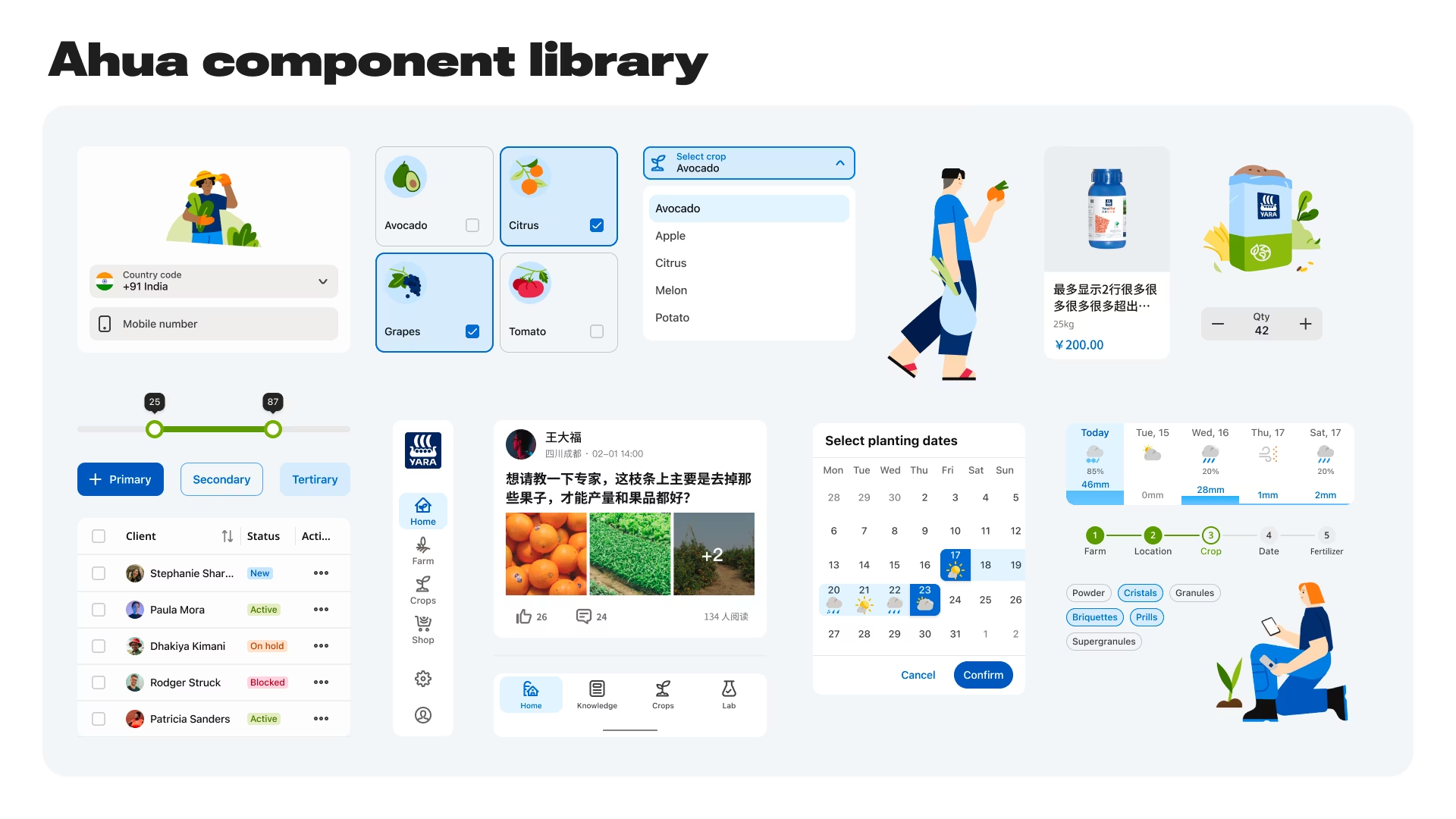
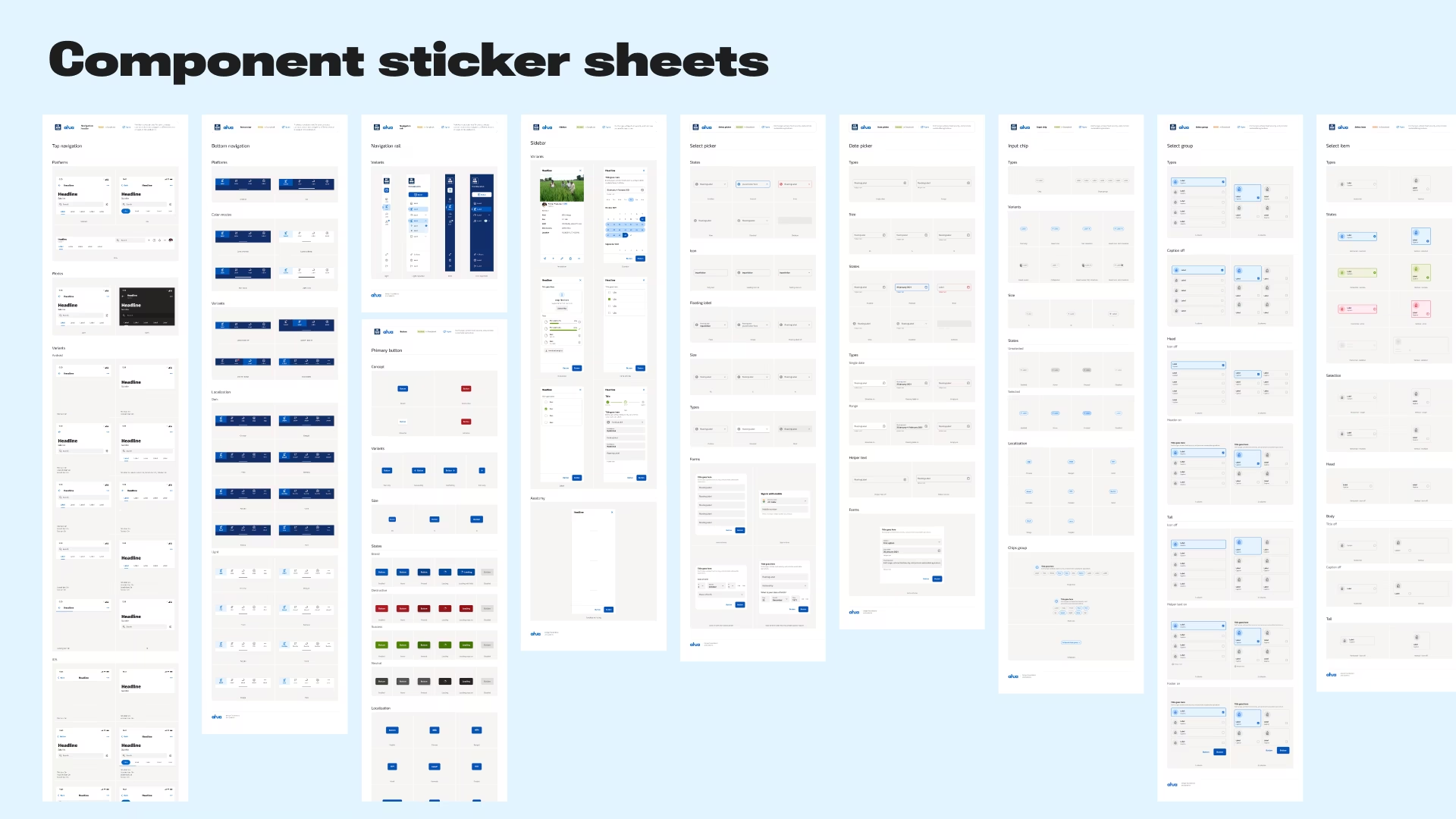
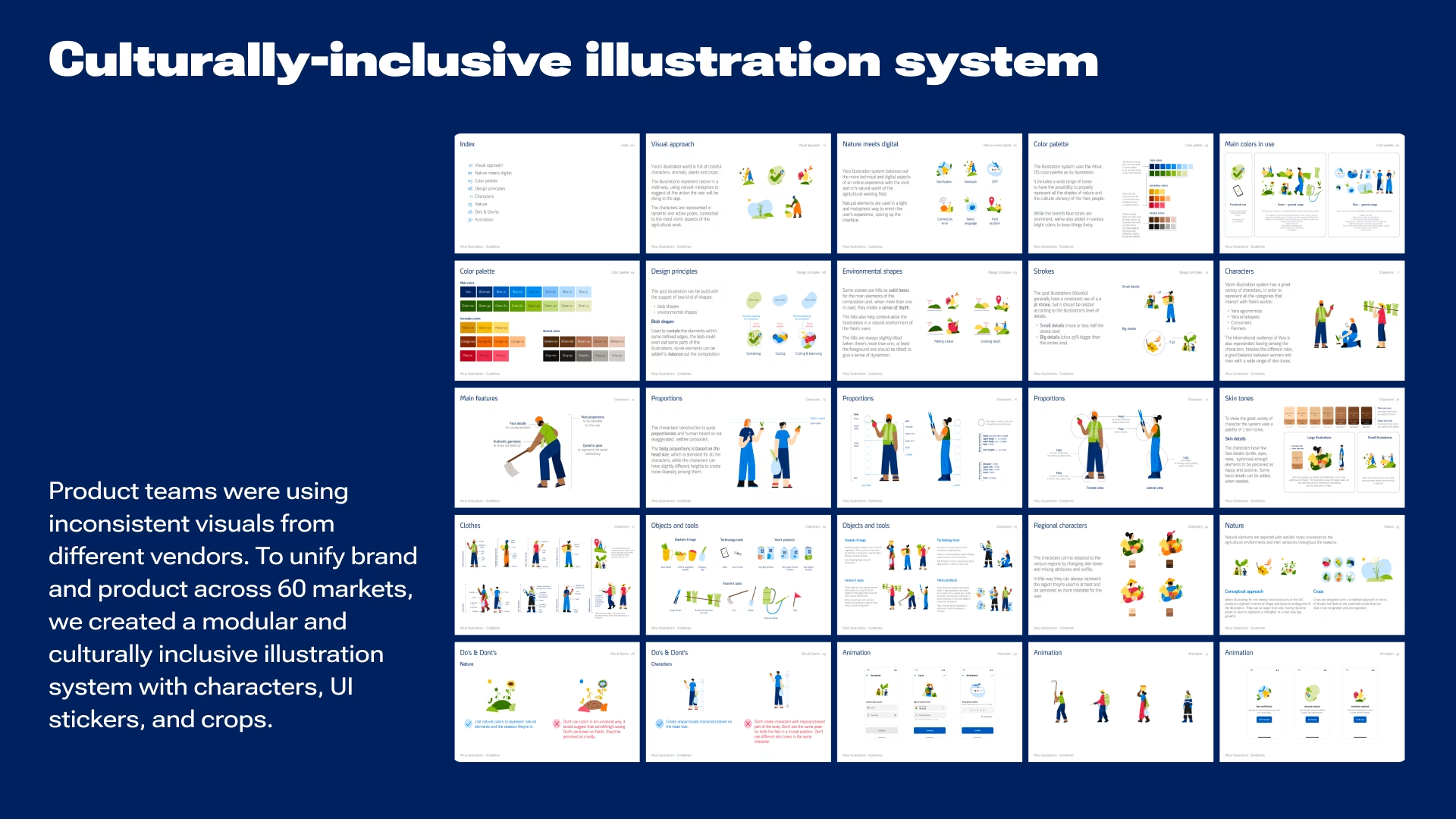
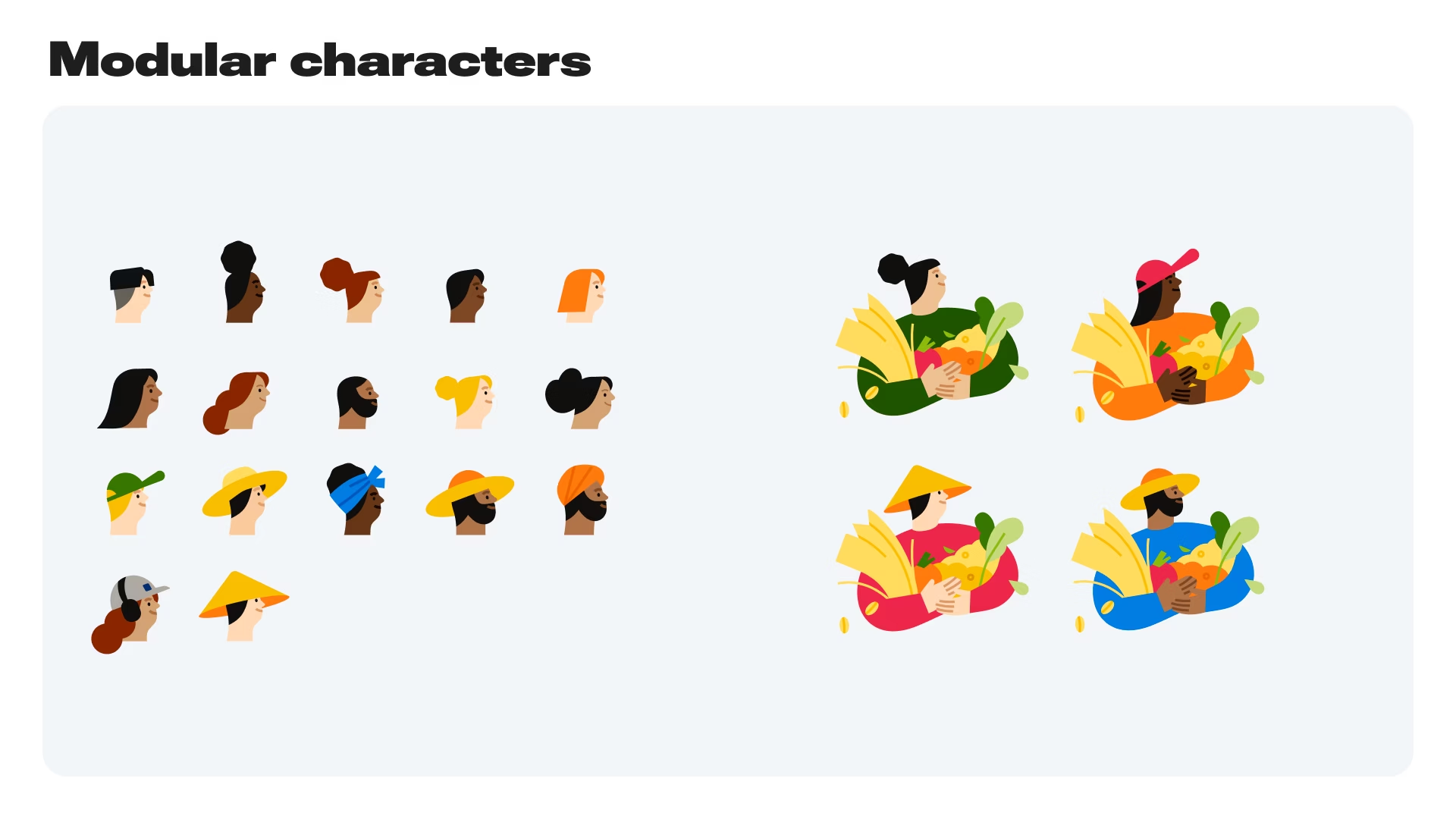
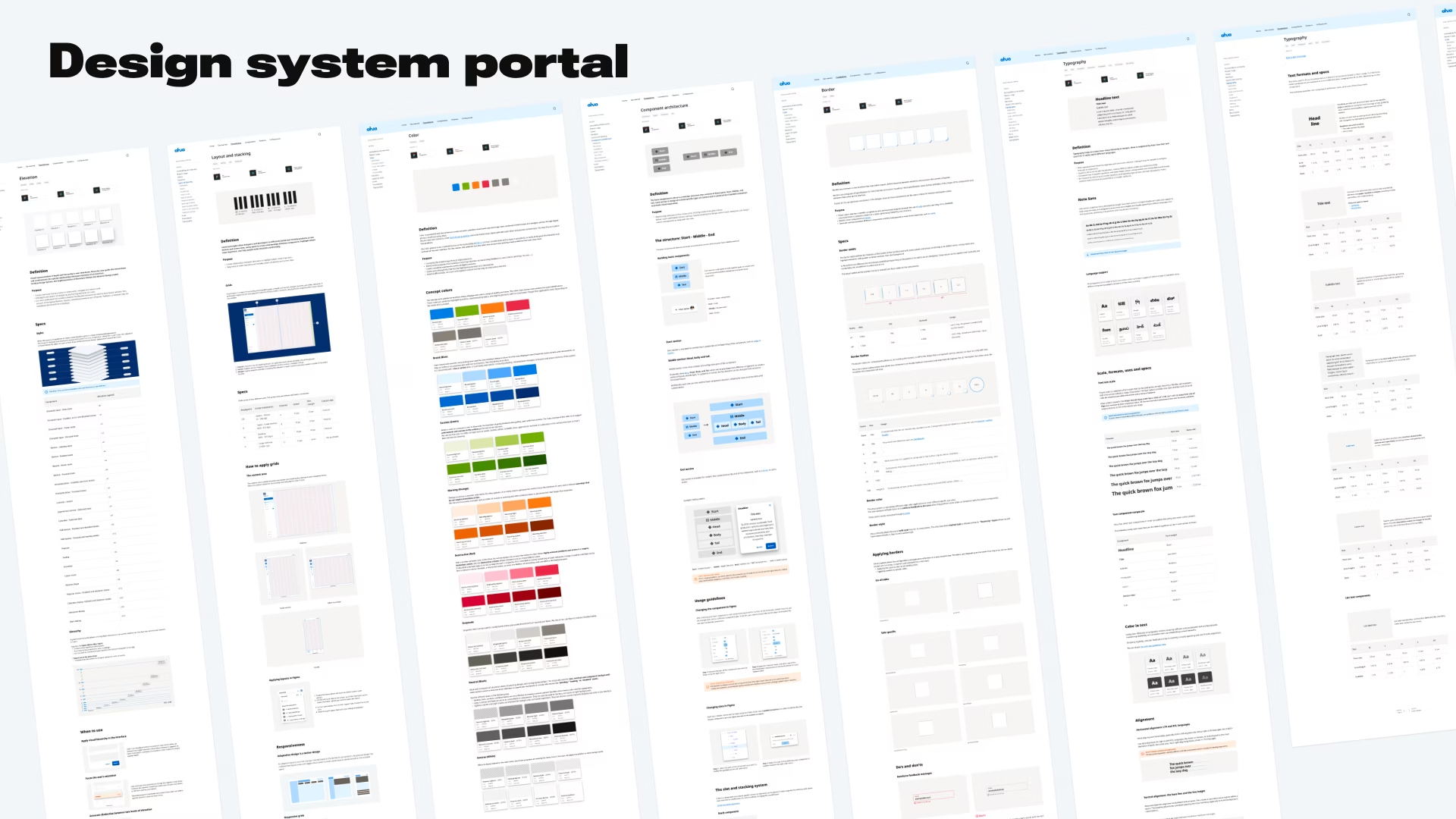
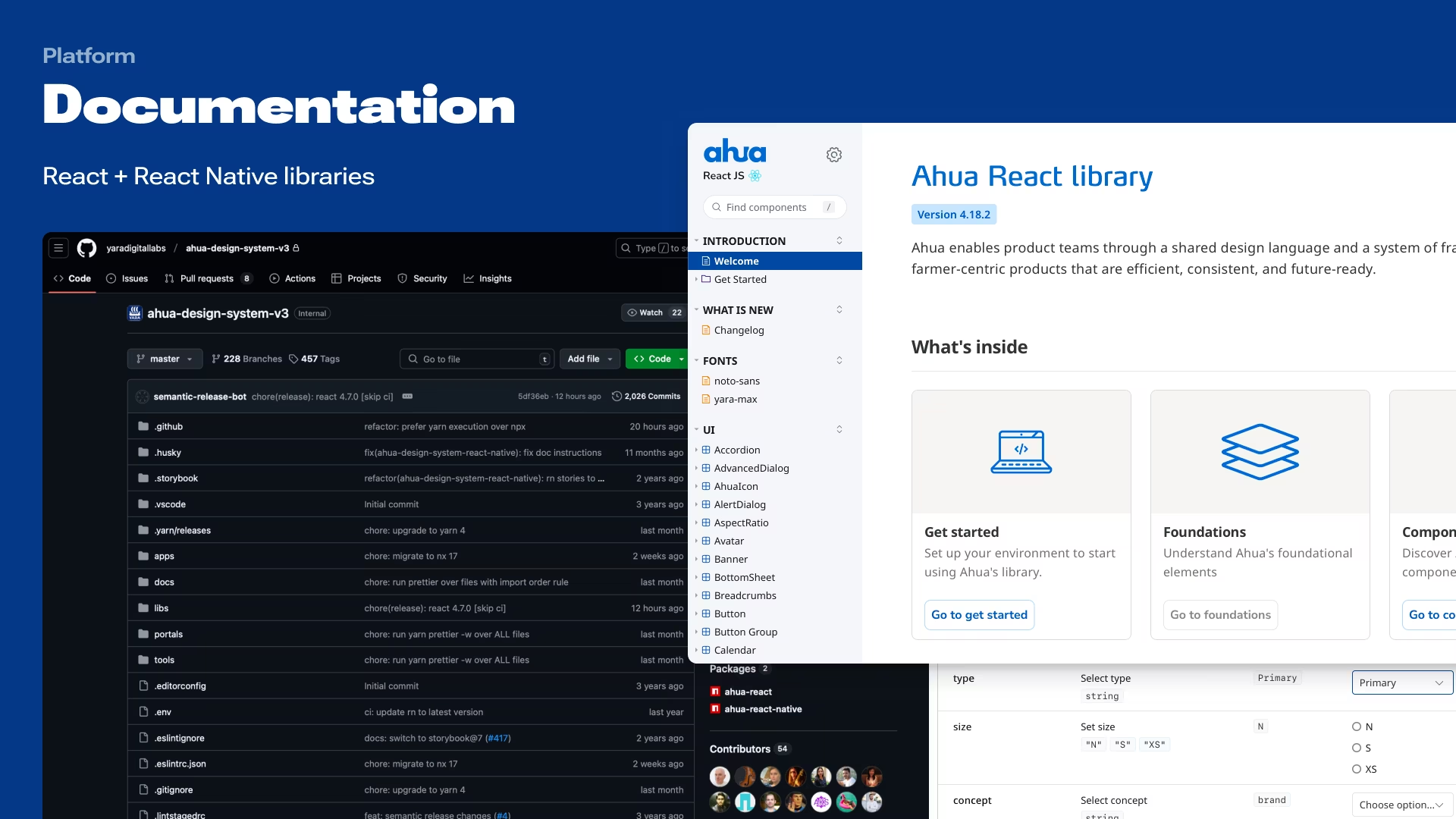
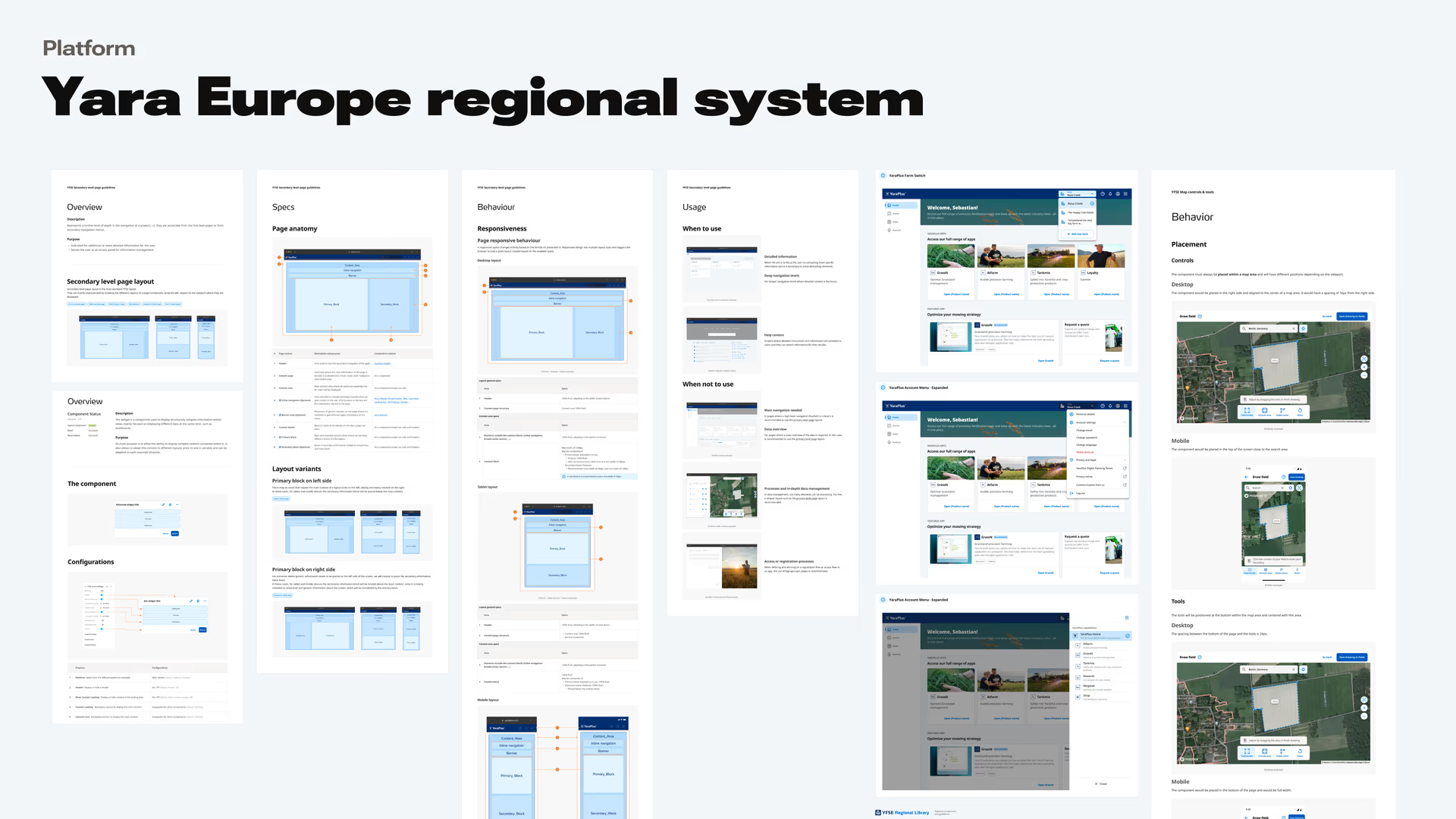
Ahua in production, from a single component in Figma to a regional library inheriting from Core.
- The core component library in Figma.
- Component sticker sheets.
- The illustration system.
- Modular characters from the illustration system.
- The Ahua portal.
- Documentation for the React and React Native libraries.
- Regional libraries inheriting from Core.
Act III — It holds
What was it worth, and what did it cost?
Six million dollars estimated return over three years. Fifty-plus teams shipping twenty-five-plus products by 2025. Forty percent reduction in design-to-development time.
Time savings, quality improvements and collaboration benefits, over the three years we measured it.
In 2023 Yara transitioned to a fully regional model, dissolving the global disciplines, design among them. To bring Ahua to formal status I took it through the Capital Value Process, Yara's method for justifying major investment. It came out with the support the system needed to be funded.
The hardest thing in seven years was never a component. AI can write code faster than a person can review it. Agents will join the collaboration next. Neither will make fifty teams agree on a shared product language, or help them understand each other, or bring them to work toward a common goal. A design system is a people system.
Ahua is still in production at Yara, used and supported by teams across the company. It outlived the team and the lead.
Companies don't change the world. People do.
Thirty-five of us built Ahua across five iterations of the team. None of it would have held without Yara's leadership backing the system and the regional teams carrying it into their own markets.
- Design
- Hendrik Kettelhut · Nicole Lian · Roopal Jain · Ahmad Nurhadi Rahim · Andrea Bazalar · Sanskrity Sinha · John Zhang · Ayume Lee · Vanessa Zevania Zheng
- Engineering
- Ajit Singh Bhurgy · Bruno Goncalves · Philip Stewart · Pooja Prasad · Mahantesh Maningol · Bijoy Ak · Kapil Dey · Suraksha Vijayanth · Hemant Sain · Bikramjit Dasgupta · Andrei Kotko · Varya Stepanova · Irina Illustrova · Alexandra Urberg · Lai Mui · Maxim Stykow, and many others
- Delivery
- CJ Pietragallo · Gagandeep Kaur · Young Teo
- Regional support
- Marisa Castellano · Himar Mustieles · Jermaine Er
- Rapid Design Team
- John Zhang · Miguel Pulau · Lena Heinrich · Camila Ribeiro · Martí Gisbert
- Digital & UX Ops
- Connor Clark-Lindh · Xavier Sorribas · Inma Ortiz Montiel